Creating a monster
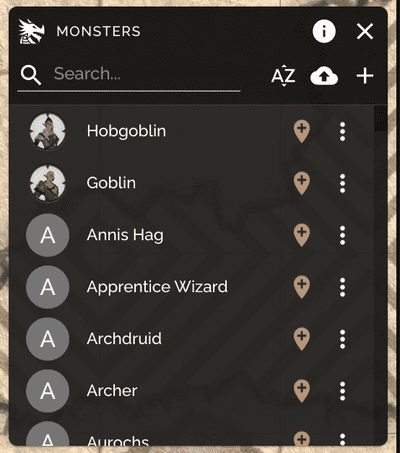
A Monster is a Non-Player Character that will be used in your game. It contains all of the standard information that an NPC stat block has. To create a monster, start by clicking on the Monsters icon on the bottom bar.

This will open up the Monsters panel. From here, click the + icon on the top right to open up the Add Monster modal.
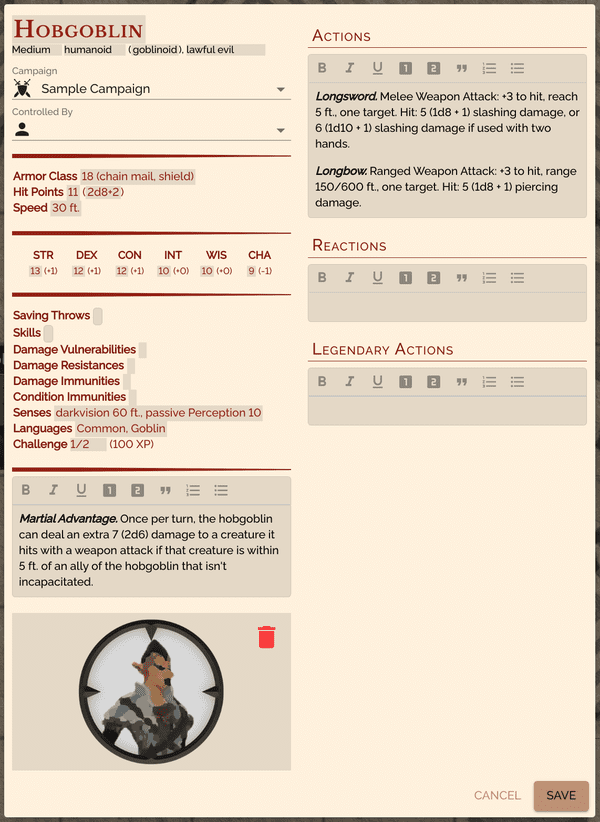
The Add Monster modal is essentially an in-place editable Stat Block. The most notable properties are:
- Size: Used to calculate the token size when adding it to the map
- Armor Class: Visible in the Combat Tracker above the HP
- Hit Points: Visible in the Combat Tracker, and optionally on the map
- Speed: Visible in the Combat Tracker
- Challenge: Used to calculate Encounter Difficulty in the Combat Tracker
If you want a monster to appear only in a specific campaign, you can set it in the Campaign field. Otherwise, it will appear in all of your campaigns. Once selecting a campaign, you can also select which players can control this creature on the map.
Once you're done adding in the details, press Add to save your changes.
To update a monster, click the actions icon on the right of the monster you want to update and then click on Edit to open the Edit Monster modal.
Allies & NPCs
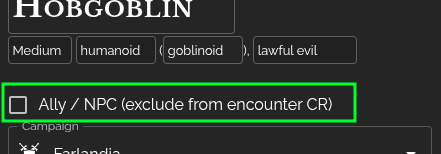
Right below the name, size, type, and alignment line, you'll find a checkbox labeled Ally / NPC (exclude from encounter CR). Check this for friendly NPCs, escorts, or summoned allies that fight alongside the party — it excludes that creature from the Combat Tracker's XP total and Encounter Difficulty calculation, so a friendly companion doesn't make an encounter look harder than it really is.
Lair Actions & Regional Effects
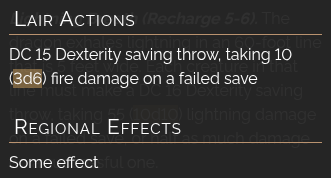
For boss monsters like ancient dragons, liches, or beholders, scroll to the bottom of the stat block to find two optional free-text sections: Lair Actions and Regional Effects. Like the Actions and Legendary Actions sections above them, these support the same rich-text formatting and dice notation. Leave them blank for ordinary monsters — they're hidden from the stat block display when empty.
Monster creation defaults
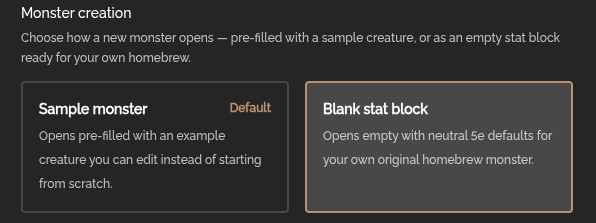
By default, the Add Monster modal opens pre-filled with a sample creature you can edit — a quick starting point if you don't want to build a stat block from scratch. If you'd rather start from a completely empty stat block for your own homebrew monsters, you can change this in your account settings.
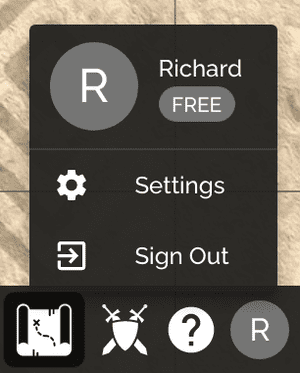
First open the Account menu from the navigation bar, and click on Settings.
Under Monster creation, choose Blank stat block instead of Sample monster, then press Update to save your changes. New monsters you create from then on will open empty, with neutral 5e defaults (Armor Class, Hit Points, and ability scores all set to 10) instead of a pre-filled example.
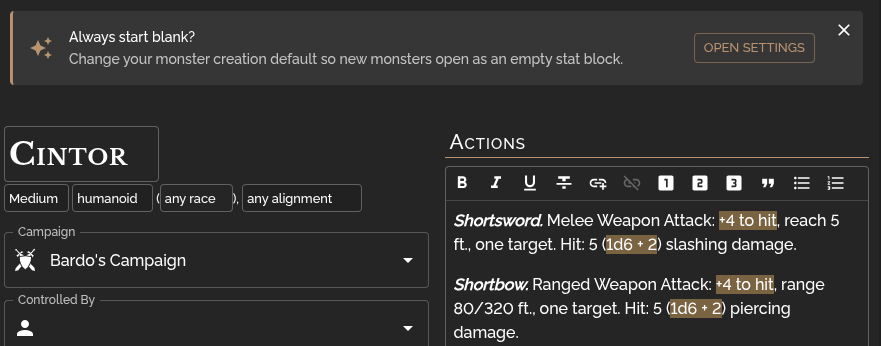
The first time you open the Add Monster modal, you'll see a one-time prompt asking if you'd like to always start blank — clicking Open Settings takes you straight to this setting.